


Advancing Truth and Reconciliation, and inclusion for all: Addressing systemic inequality through education
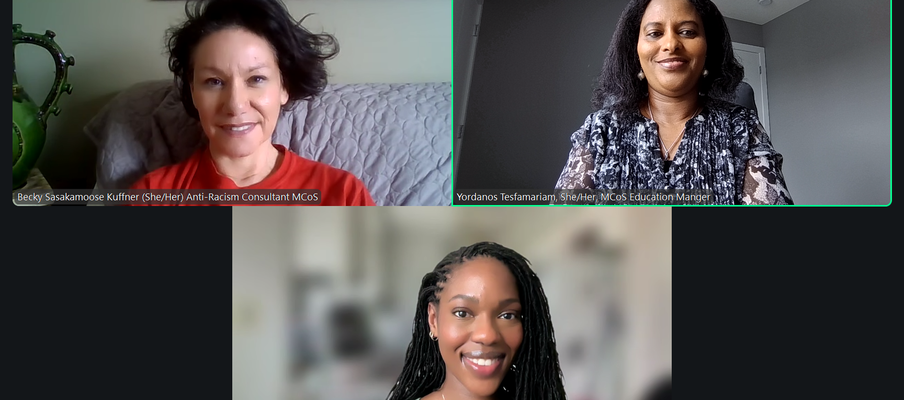
Over the past year, SaskCulture participated in a pilot program designed to help organizations better understand and address the impacts of colonial systems and the inequities they create for marginalized communities.
The Multicultural Council of Saskatchewan’s (MCoS) new program, We Are READI (Reconciliation, Equity, Anti-racism/Anti-oppression/ Access, Decolonization/Diversity, Integration/Inclusion), supports organizations in advancing equity, diversity and inclusion through an anti-racism and anti-oppression lens. For its pilot phase, MCoS selected SaskCulture and the Saskatchewan Archaeological Society to participate.
“Addressing systemic inequality, both historical and ongoing, requires more than standalone policies or initiatives,” says Yordanos Tesfamariam, education manager and project lead, MCoS. “Meaningful and lasting change happens when an anti-racist, anti-oppressive, decolonized, and trauma-informed lens is embedded across all organizational policies and practices.”
Tara-Leigh Heslip, outreach consultant, SaskCulture, says that taking part in the pilot project benefited SaskCulture staff and the organization at large.
“It was important for SaskCulture to be involved with the pilot of the program, as anti-racism, anti-oppression, inclusivity, equity, and diversity are all principles that are built into our Strategic Plan and need to be backed up by learnings and actions,” says Heslip. “All of the staff at SaskCulture found the learning modules to be very approachable.”
The program includes a range of supports designed to help organizations create meaningful and lasting change. These include educational learning modules that guide systemic transformation as well as consultation that strengthens accountability and helps teams take practical and meaningful steps toward cultural safety and impactful action. It offers tools to help organizations address systemic barriers, align their structures and practices with equity and justice, and build stronger, more authentic relationships with communities.
Flany Ba, the equity, diversity, and Inclusion consultant for the program, says that “Decolonization and antiracism and anti-oppression work is not something that will be done in one day; it’s not possible.” The program’s design reflects this understanding, taking a long-term, thoughtful approach to change.
Becky Sasakamoose Kuffner, the program’s anti-racism consultant, agrees. “Decolonial education has proven to be not only trauma-informed, but it brings human beings, all of us, back to the cycles and the rhythms of who we are as parts of nature,” she says. “That’s why we began by bringing humanity into what we’re doing, moving away from the status quo.”
To support this approach, the program also intentionally builds reflection into its learning modules, helping participants deepen their understanding and apply what they learn in meaningful ways