

Saskatchewan: By the numbers and beyond
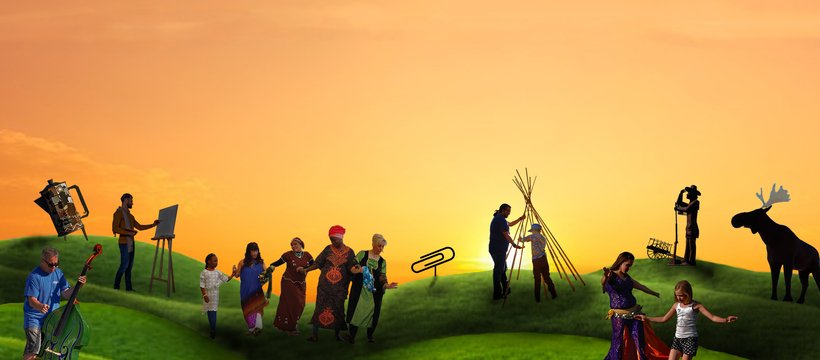
Saskatchewan’s population is made up of a growing diversity of people. Understanding who we are helps shape a vibrant, inclusive future for all. These numbers only tell part of the story.
By the Numbers
According to the Saskatchewan Bureau of Statistics 2021 Census Population Report:
- 1.22 million people call Saskatchewan home.
- Over 19% of the population identifies as Indigenous — the highest proportion among Canadian provinces.
- More than 17% of people in Saskatchewan are immigrants, a number that continues to grow every year.
- Over 170 languages are spoken across the province.
- Nearly 1 in 5 residents live in rural areas.
- Median age: 39 years.
Cultural Richness
Indigenous Roots:
Saskatchewan has one of the highest percentages of Indigenous populations in Canada, with 17% identifying as Indigenous (First Nations, Métis, or Inuit).
- There are 70 First Nations in Saskatchewan. Of these, 63 are affiliated with 1 of the 9 Saskatchewan tribal councils. The 5 linguistic groups of First Nations in Saskatchewan are: Cree; Dakota; Dene (Chipewyan); Nakota (Assiniboine); Saulteaux. https://www.otc.ca/ckfinder/userfiles/files/fnl_1100100020617_eng.pdf
- Saskatchewan is also the homeland of the Métis, making Michif another Indigenous language spoken within Saskatchewan. The self-identified Métis population was 62,800 persons (5.7 per cent) of the population, and 460 individuals self-identified as Inuit in Saskatchewan. Although the Inuit population represented a small portion of the population in Saskatchewan, that group had the highest relative increase at 27.8 per cent.
- Treaties 2, 4, 5, 6, 8 and 10 cover the province of Saskatchewan.
- According to the 2021 Census data, Saskatchewan’s population of self-identified Indigenous was 187,885 (17.0 per cent). There are 165,394 registered individuals; 85,798 registered people were listed as living off a reserve, and 79,596 people were listed as living on a reserve.
Immigration:
Nearly 13% of Saskatchewan residents are immigrants, enriching our communities with global perspectives, languages, and traditions.
- Saskatchewan had an immigrant population of 137,620, representing 12.5 per cent of the total population. This is an increase of 25,125 persons from 2016 and the fourth highest growth among provinces.
- There were also 15,830 non-permanent residents (which include persons who held work or study permits, refugee claimants, as well as family members living with them in Canada) in Saskatchewan in 2021, compared with 12,260 in 2016.
- In 2021, the top five countries of birth among recent immigrants (landed between 2016 and 2021) to Saskatchewan were the Philippines (24.3 per cent), India (18.4 per cent), China (8.5 per cent), Nigeria (7.7 per cent) and Pakistan (3.9 per cent).
- The Philippines was the leading country of birth among people who immigrated to the province between 1980 and 2021, accounting for 26.1 per cent of the total immigrant population.
- In Saskatchewan, 11.3 per cent of immigrants were in the 0 to 14-year-old cohort, which is the highest proportion among provinces. Most of Saskatchewan’s immigrants were between 25 and 54 years of age (55.1 per cent of total immigrants), while senior immigrants accounted for 11.1 per cent. Of Saskatchewan immigrants who landed between the years 2016 to 2021, 59.6 per cent were in the core working age (25 to 54 years).
- In Saskatchewan, 50.8 per cent of the population reported a single ethnicity while 49.2 per cent reported multiple ethnic origins. According to the 2021 Census data, Saskatchewan continues to be populated by persons of European ethnicity at 66.0 per cent. In terms of single ethnicity, Canadians made up the largest portion at 13.2 per cent of all single ethnic origins.
Cultural Diversity
While English remains dominant, over 100 languages are spoken across Saskatchewan households, including Cree, Dene, Michif, Tagalog, Ukrainian, German, Punjabi, and French.
- % of Indigenous languages
- 15% of the population are immigrants or newcomers, coming from countries like the Philippines, India, China, Nigeria, Ukraine, and Pakistan.
- % of French
- Over 30 multicultural festivals are celebrated each year, from Ukrainian dance to African drumming.
Accessibility
About 1 in 5 people in Saskatchewan live with a disability.
- That’s nearly 250,000 residents, with a range of visible and invisible disabilities.
- Aging populations, especially in rural areas, are increasing the demand for accessible spaces and services.
Gender Diversity
- According to Statistics Canada, close to 3% of Canadians aged 18-59 identify as LGBTQ+. Although independent, non-government studies argue that this number may be much higher, with some noting that up to 13% of the population in Canada is LGBTQI2S.
- Of the more than 30.5 million Canadians aged 15 and over who were counted on the census, 100,815 of them identify as transgender or non-binary. That's 0.33 per cent of the total population, or about one in 300 people. That number is broken up further with 59,460 people as transgender and 41,355 as non-binary.
- According to the 2021 Census, 2,530 people in Saskatchewan (nearly 1 in 300) aged 15 and over identify as transgender or non-binary. This breaks down to: 665 transgender men, 790 transgender women, and 1,075 non-binary people.
- Transgender and non-binary people accounted for a small proportion of Saskatchewan's population, with .16 per cent of the population over the age of 15 identifying as transgender and .09 per cent of its population identifying as non-binary. Those numbers gave Saskatchewan the second fewest people who identified as transgender or non-binary among provinces.
Growing Younger and Older
Saskatchewan's population is both youthful and aging.
- Under 15 years: 223,115 individuals
- 15 to 64 years: 711,410 individuals
- 65 years and over: 197,985 individuals
All data in this report are preliminary and subject to revision. For more details, contact the Saskatchewan Bureau of Statistics at (306) 787-6330 or visit: https://www.saskatchewan.ca/stats. Additional information is available at Statistics Canada.
Why demographics matter
Understanding Saskatchewan’s demographic makeup helps organizations, community and cultural leaders design programs and services that are responsive, relevant, and inclusive. This can help:
- Guide inclusive cultural planning
Knowing who lives in a place and where they come from is just the first step toward creating inclusive plans and strategies. Going further to understand where they come from, how they identify, and what barriers they may face makes cultural planning more equitable. This deeper understanding ensures funding, programming, and outreach efforts reflect the province’s diversity and support underrepresented communities.
- Supporting stronger communities
Demographics help us understand the social fabric of our province. This knowledge strengthens cross-cultural connections and promotes collaboration between people of different backgrounds and lived experiences.
- Shaping a more inclusive future
Demographic insights help to plan for a future that works for everyone, young and old, Indigenous and newcomer, rural and urban.